Work
Here’s my take on work…
We all need to work to live.
While most people equate the word work with financial employment, I understand it to be more than that.
The work that is required to live, in my view, is made up of two main components. The first deals with operating so as to meet one’s most basic survival needs and the second deals with occupying ourselves to improve our living conditions, add to our provisions, and enrich our lives (& the lives of those around us).
We all need:
- Clean air to breathe,
- Clean water to drink,
- A safe & secure place to dwell & sleep,
- Protection from extreme temperatures, forces of nature, predators and invaders,
- A hygienically sound sewage/waste management system,
- Non-toxic, nourishing food, and
- Harmless companionship.
Groomed to Work for Dollars
Our society has groomed most of us over the past several generations to become financially employed in order to obtain the funds to pay to meet the above needs and desires. And this has led to multiple generations of financial enslavement.
Shelter
Usually, the first five items on the above list are provided to us free of charge during childhood in our parents’ home — of course, our parents are bearing the brunt of financially paying for it.
And then, most of us either seek to move out on our own when adulthood settles in or are essentially pushed out to make our own way.
As a result, we generally find ourselves either financially committing to some kind of housing rental agreement or personally taking on long-term debt in order to acquire our own house.
Either way, our housing typically comes at a high financial cost. (And that cost is ever-increasing.) And a monthly recurring expense for the utilities of water, sewer & waste management are tacked onto that.
Food
The sixth item on the above list is often generally found in grocery stores and restaurants in all shapes & sizes, and they all require money in exchange. (And the cost of food is also ever-increasing.)
While there is the possibility of producing some of our own food, provided we have fertile soil, adequate sun exposure, sufficient water, viable seed and the knowledge & understanding to do it (& do it well), most people do not choose this.
Gardening doesn’t necessarily have to cost a lot of money — unless there’s a lack in one or more of the above, but it does take a dedicated amount of personal attention, time and effort to see a seed all the way through to the production of edible food.
And then there’s the added work of preparing, preserving & properly storing what’s been produced to have on hand for later consumption.
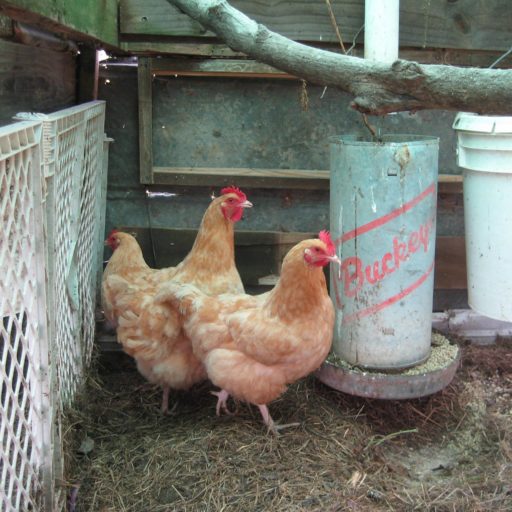
Additionally, or alternatively, if we are able to acquire & care for livestock and provide them safe shelter, food & water, then we can also benefit from their produce in the forms of meat, milk & eggs. But this option takes adequate space & fencing and year-round daily attention & diligent care.
Energy
Given modern technology, most lighting fixtures and appliances such as washing machines, dryers, dishwashers, ovens, refrigerators, hot water heaters, and heat & air conditioning units require some kind of energy to power them, such as electricity, propane, and/or heating oil. And all of these things come at a financial cost (in addition to the cost in acquiring the fixtures & appliances themselves).
Transportation
Given that most of the stores, dining establishments & marketplaces we frequent are not usually within walking distance, transportation is often needed to obtain what we need or want from them — and that costs money, too.
Companionship
The last item on the above list typically comes from those with whom we share a roof. It can also come from those who live nearby.
However, oftentimes, most companionship is found within a portion of those with whom we work our financial employment, worship/practice our particular religion, learn a particular course of study and/or play. While the employment & religious venues don’t typically cost us money, the learning institutions & leisure-type venues sometimes do.
Communication
Lastly, in order to communicate in real time with those at any distance from us, a telephone & connection service are required. And that costs money, too.
A Better Way
Personally, I believe a more financially sound (& healthy) way of life is to cooperatively co-house with trusted individuals and produce as much of our own food, energy & other necessities as reasonably possible utilizing the natural resources available to us. And then commune* with these individuals (& others whom we trust, care about and physically dwell around) — out of our own base of operations: our home & the land on which it sets.
*Commune (verb): a group of people living together and sharing possessions and responsibilities. (This doesn’t necessarily mean sharing everything with one another.)
Co-housing
We can choose to live with trustworthy family and/or intimate friends in a reasonably sized, safe shelter, in a clean-air-&-water environment, on land with fertile soil, adequate sunshine, and sufficient water, alongside other trustworthy people who share the same values.
And then, as part of each day’s work, each household member can work cooperatively to maintain & improve their living conditions.
Food Production & Energy Conservation/Production
Since everybody needs to eat, it stands to reason that every person ought to dedicate a portion of his/her daily work to producing some of their household’s own food (& helping manage it to some degree).
Each member can work cooperatively with one another to prepare to: safely store, use and/or preserve their land & livestock’s produce.
Additionally, each member can work cooperatively with one another to be more energy efficient and work towards tapping into other natural sources to meet their household’s energy needs.
Financial Employment
Given the requirement to meet the household’s financial demands (as well as each individual’s financial needs) in the modern age, members of the household would naturally continue to engage in some kind of financial employment.
Utilizing the Internet, there are multiple ways to earn dollars from home.
Then, given the lesser financial burden due to shared housing and home-produced food (& the acquisition of hand-me-down goods), less time and energy are typically needed to acquire the finances to meet that financial burden.
Community Development
And lastly, in order to meet our personal social needs and the various neighboring needs, I believe an essential component to one’s daily work is to be engaging in an industry, amenity, or service of some kind that will regularly benefit our most local community of trusted neighbors, friends & family.
I’m talking about contributing something of value to our private, personally known community, utilizing our privately-owned spaces as the hub of our operations.
This can include:
- Hosting, preparing &/or serving meals (without financial compensation).
- Providing & facilitating gathering spaces (indoor &/or outdoor).
- Arranging & facilitating activities, social gatherings and learning, sharing &/or employment opportunities.
- Providing a lending library of some kind.
- Designating a space to write, post &/or display printed resource materials, special announcements, calendar events, business information, and personal offers, wants & needs.
- Writing & publishing a bulletin or newsletter containing any or all of the above information.
In Conclusion
I believe a return to a more natural way of life is in order. One that consists of working with the natural & human resources within and around our dwelling places in order to live and then reaching out to lovingly serve those around us from there.
But it doesn’t end there. One more necessary aspect of life is rest. <– Click to read my take on that.
[This page was written by Carrie (not Kelly) and last updated on 1/7/26.]